


The modern CMO is no longer just a marketer. At eTail Toronto 2026, Jeremiah Curvers breaks down how AI is pushing marketing leaders to operate closer to data, operations, and real business outcomes.
The New CMO in Retail Isn’t a Marketer — They’re a Business Operator
At eTail Toronto 2026, one thing is clear: the role of the Chief Marketing Officer is being redefined in real time. As AI accelerates execution and data becomes more accessible, the real differentiator is no longer campaign performance—it’s business context. Today’s CMO is expected to connect marketing decisions directly to operational realities, revenue outcomes, and profitability.

From Campaign Execution to Business Ownership
For years, CMOs operated across two primary domains: brand and performance. While mastering both is still essential, it’s no longer enough.
The modern retail environment demands a broader scope:
- Understanding operational constraints
- Interpreting cross-channel impact
- Aligning marketing with revenue and fulfillment realities
Marketing no longer operates in isolation. Every decision now has a direct impact on business performance.

Execution Is Easy. Decision-Making Is Not.
AI has made it significantly easier to launch, test, and optimize campaigns. But as execution becomes commoditized, the real challenge shifts to decision-making.
What matters now is not:
- How fast you launch campaigns
But: - Whether those campaigns align with what the business can actually deliver
This is where many teams fall short—not in execution, but in context.
A Simple Example That Defines the Modern CMO
Consider this scenario:
- You typically sell 1,000 units per month
- Your cost per acquisition is $10
- Your total marketing spend is $10,000
Now introduce a constraint:
- You can only produce 600 units
A traditional approach would maintain spend based on historical performance.
A modern CMO does something different:
- Adjusts spend to $6,000
- Aligns acquisition with actual capacity
This is not optimization.
This is real-time business alignment.
AI Doesn’t Replace Strategy — It Exposes It
AI improves efficiency across the board:
- Better targeting
- Faster optimization
- Lower execution costs
But it also removes excuses.
When everyone has access to the same tools, the advantage shifts to:
- Better decisions
- Stronger alignment
- Deeper understanding of the business
Poor decisions become more expensive—and more visible.

The Rise of the Data-Driven, Cross-Functional CMO
The next generation of CMOs will operate at the intersection of:
- Marketing
- Data & BI
- Operations
- Revenue strategy
They will:
- Translate data into action
- Balance brand and performance
- Align growth with operational constraints
- Own both efficiency and profitability
This is where marketing evolves into a true business function.
What This Means for Retail Leaders
Retail leaders must rethink how marketing operates within their organizations.
Success now depends on:
- Alignment between demand generation and supply capacity
- Faster, data-driven decision loops
- A shift from growth at all costs to profitable growth
Marketing is no longer just a growth engine—it’s a profit lever.
At eTail Toronto: The Conversation That Matters
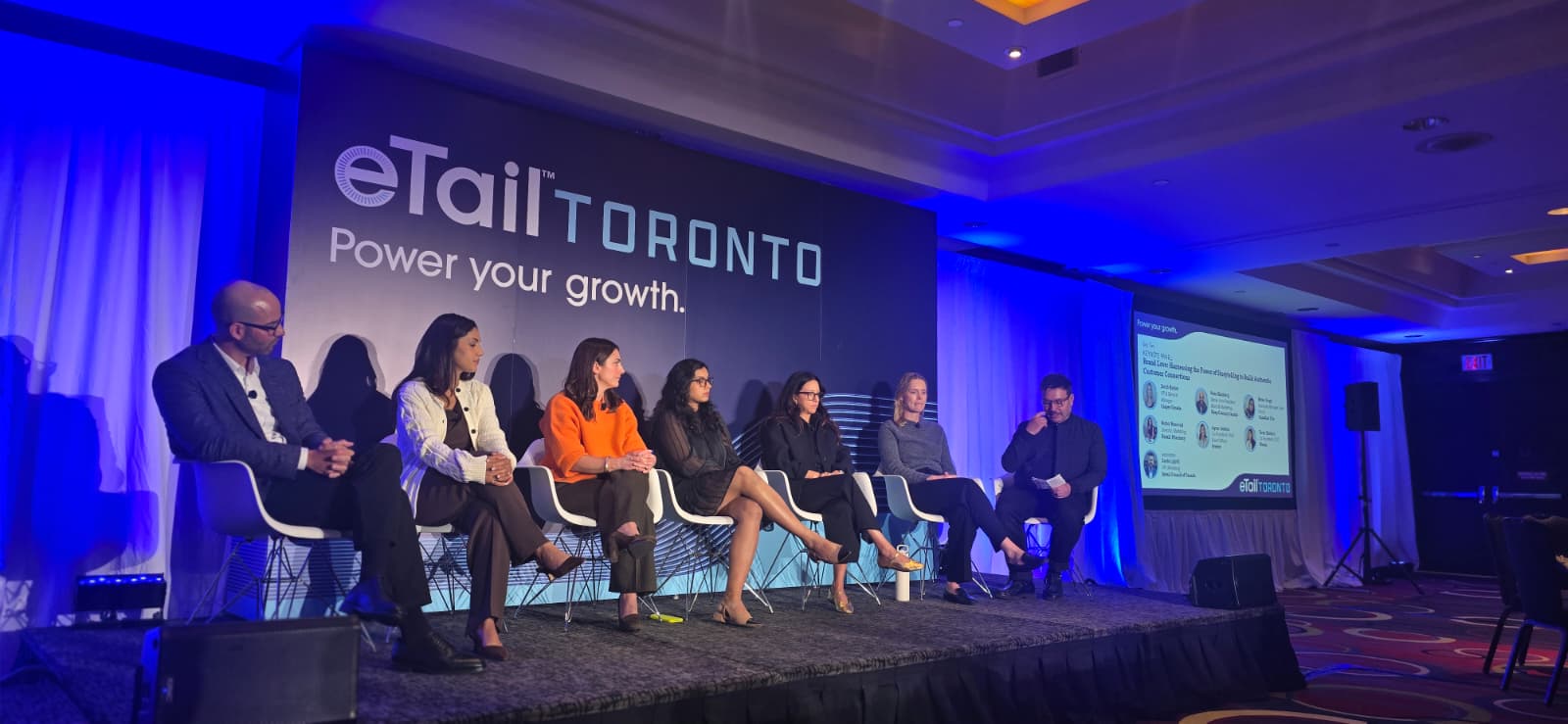
As a jury member and speaker at eTail Toronto 2026, this is the conversation worth having.
Not:
“How do we improve campaign performance?”
But:
“How do we align marketing with the actual economics of the business?”
This is where the next generation of retail leaders will differentiate.
Final Thought
The CMO role is no longer expanding—it’s converging.
Into:
- Strategy
- Data
- Operations
- Revenue
Those who understand the full system—and act on it—will lead the next era of retail.
